CZ
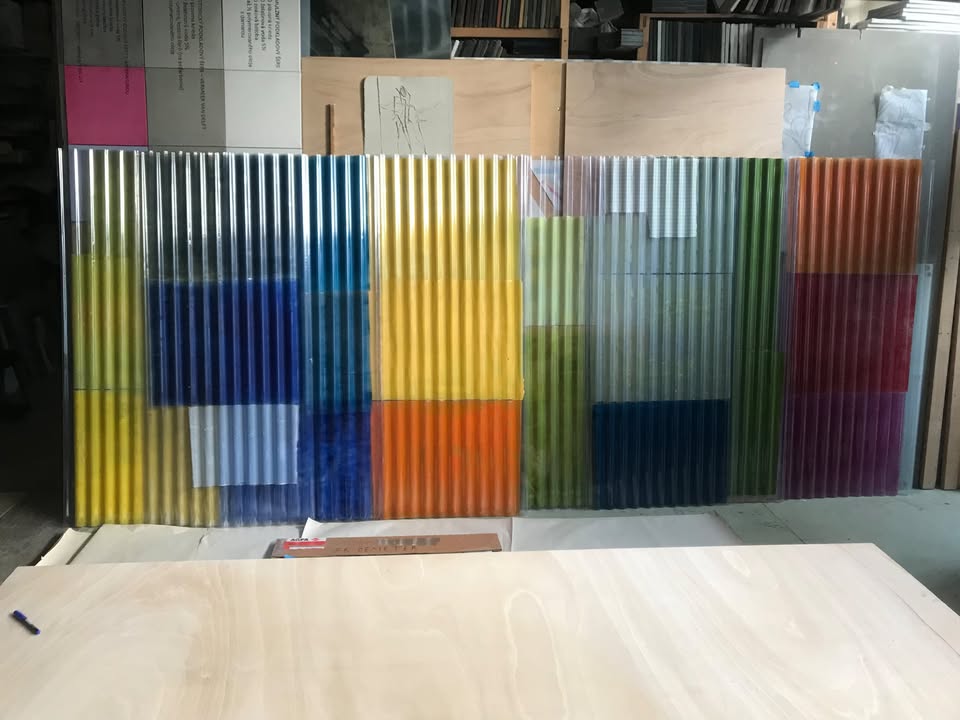
František Demeter v Nic než cokoliv zkoumá malbu, která už není obrazem odděleným od svého okolí. Koláž částečně průsvitných barevných ploch působí jako předěl, který prostor vymezuje, ale neuzavírá. Barva je zároveň tím, na co se díváme, i tím, skrze co se díváme.
Barevné vrstvy papíru nasáklého epoxidovou pryskyřicí s pigmenty se spojují se zvlněnými polykarbonátovými plochami. Reliéf a pevnost ž dávají instalaci tvar a oporu, zatímco průsvitnost otevírá pohled do vrstev materiálu i na prostor za dílem. Svislé zvlnění zároveň rozkládá plochy do opakujících se pásů a proměňuje barevnou koláž v rytmickou, modulární sestavu. Rozdílná krycí schopnost pigmentů – například kostní černi, indické žluti či ultramarínu – určuje, co z těchto vrstev a z prostoru za nimi zůstává viditelné a co se ztrácí.
Instalace navazuje na neoavantgardní zpochybnění autonomie malby i na úvahy o rozšířené malbě, v níž nosič přestává být neutrálním podkladem a prostor za dílem pouhým pozadím. Barevné plochy lze číst také jako architektonický plášť. Adolf Loos v Principu obkladu (1898) popisuje zavěšené koberce, které vymezují místnost podobně jako stěny; konstrukce, která je drží na místě, přichází v jeho úvaze až poté. Materialove plochy však nejsou architektonickým obkladem, nýbrž propustnou hranicí mezi obrazem a jeho okolím.
Instalace zároveň vzniká opětovným použitím a přeskládáním materiálu starších děl. Každá nová realizace představuje dočasnou konfiguraci prvků s vlastní historií, nikoli konečný stav. Místy až „igelitový“ efekt syntetického povrchu narušuje představu čisté malířské abstrakce; epoxid není jen nosičem pigmentu, ale mění také způsob, jakým vnímáme barvu.
Mira Keratová
ENG
In Nothing but anything, František Demeter explores painting that is no longer an image set apart from its surroundings. A collage of partly translucent planes of colour acts as a partition, defining space without enclosing it. Colour is both what we look at and what we look through.
Layers of paper saturated with pigmented epoxy resin are combined with corrugated polycarbonate sheets. The relief and rigidity of materials give the installation shape and support, while its translucency allows us to see into the layers of material and the space behind the work. The vertical corrugations divide the planes into repeating bands, turning the colour collage into a rhythmic, modular arrangement. Differences in the opacity of the pigments – including bone black, Indian yellow and ultramarine – determine which layers and which parts of the space behind them remain visible, and which disappear.
The installation draws on neo-avant-garde challenges to the autonomy of painting, as well as ideas of expanded painting, in which the support ceases to be a neutral ground and the space behind the work is no longer merely a backdrop. The coloured surfaces can also be read as an architectural skin. In The Principle of Cladding (1898), Adolf Loos describes hanging carpets that define a room much as walls do; only then does he consider the structure that holds them in place. The materials sheets, however, are not architectural cladding but a permeable boundary between the image and its surroundings.
The installation also takes shape through the reuse and rearrangement of material from earlier works. Each new iteration is a temporary configuration of elements with histories of their own, rather than a final state. At times, the synthetic surface has an almost plastic-sheet-like quality that unsettles the idea of pure painterly abstraction; epoxy does more than carry the pigment – it also changes how we perceive colour.
Mira Keratová